

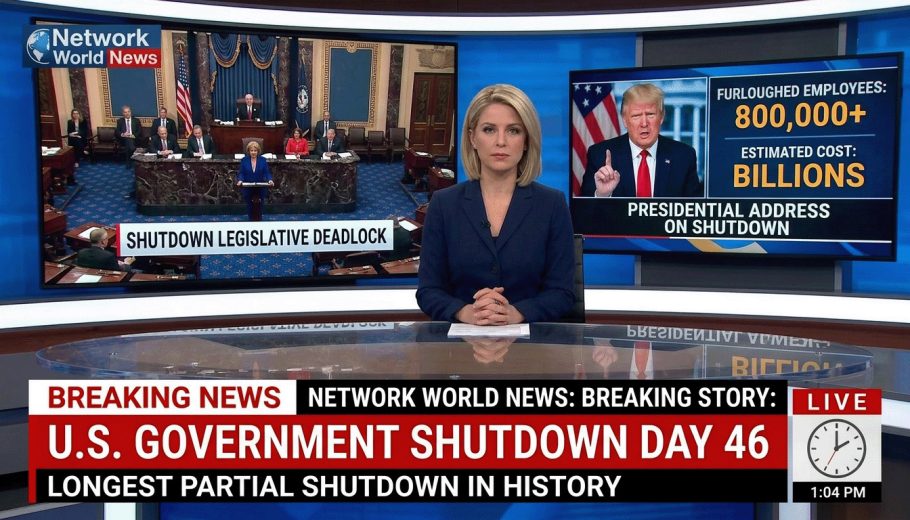
Day 46 marks a sad record: the longest partial shutdown in U.S. history. The Department of Homeland Security is at the heart of the funding issue. What started as a usual fight has turned into something more complex and unpredictable.
This time, it’s not just a simple fight between Republicans and Democrats. The real issue is a growing divide within the GOP. Despite being in control, the party is stuck, with no clear plan and growing pressure from all sides.
The shutdown’s effects are spreading far beyond Washington. Services are delayed, and projects are stalled. The uncertainty is making Congress think differently about its next moves.
President Donald Trump, usually a unifying force, is quiet now. A Middle East conflict is taking up his time, making it harder for lawmakers to find their way.
At the heart of the issue are different strategies. Senate Majority Leader John Thune wants a deal that can pass the Senate. House Republicans, on the other hand, are pushing for a harder stance. This has led to a deeper funding crisis, as seen in coverage of the shutdown nearing a record and the high stakes in each round of talks.
Key Takeaways
- The Government Shutdown has reached day 46, the longest partial shutdown on record.
- DHS is at the center of the federal government closure, raising security and staffing concerns.
- The effects of the shutdown now include wider service disruptions and growing economic unease.
- Republican unity is fraying, even as the party holds power in Washington.
- President Donald Trump’s influence is less direct as global conflict pulls focus.
- The consequences of the shutdown are intensifying as Thune’s Senate strategy clashes with House demands.
Government Shutdown updates as DHS closure hits day 46
Day 46 marks a critical point in the government shutdown. Washington is struggling to find a solution to reopen the Department of Homeland Security. The crisis is affecting daily operations and planning.
The shutdown is causing delays at airports, disruptions to disaster readiness, and slowdowns in border operations. The longer it lasts, the bigger the economic impact on contractors, vendors, and travel.
How a bipartisan DHS reopening deal unraveled
Senate Majority Leader John Thune proposed a bipartisan solution. It aimed to reopen DHS first, then deal with other issues later. The idea was to find a middle ground.
But the House rejected this plan. Republicans opposed it, leading to a new crisis. The situation is tense, with little room for compromise before the next deadline.
Senate Majority Leader John Thune’s decision to drop immigration enforcement funding
Thune decided to exclude immigration funding from the package. Supporters said it was the only deal Democrats would accept. They argued Senate rules make a partisan fix difficult.
Leaving out immigration funding raised distrust. It added uncertainty about which services might be more likely to suffer if staffing gaps grow.
House GOP revolt blocks the Senate plan and deepens the government funding crisis
House Republicans blocked the Senate plan. This move deepened the funding crisis. Leadership is now focused on damage control rather than finding solutions.
Thune and Speaker Mike Johnson talked several times after the failure. But no details were shared. The economic impact risk is growing as delays and planning issues mount.
Why there’s “no path out” as Republicans run Washington during the longest-ever DHS shutdown
The phrase “no path out” reflects the current stalemate. The standoff involves distrust within the GOP and the Democrats’ lack of incentive to fix the process. Shutdown updates now detail missed deadlines and growing tensions.
- Operational pressure can mount at TSA checkpoints and in back-office support that keeps airports moving.
- Readiness work can slow down at FEMA, including planning and grant administration tied to the disaster season.
- Border workloads at CBP and ICE can strain staffing and case management, even when core missions continue.
The shutdown’s effects extend beyond DHS, impacting pay, vendor invoices, and travel. The economic impact grows with each delay, as seen in the government shutdown week 3 coverage.
At the heart of the issue are unresolved demands on enforcement policy and oversight tools. These unresolved choices keep the crisis alive, making each update feel like a countdown, as explained in the DHS shutdown stalemate reporting.
Political ramifications inside the GOP as the federal government closure drags on
The federal government closure is causing big problems for the Republican Party. Private disagreements are now public, affecting how the party acts. Each day, the pressure from voters, donors, and agency stakeholders grows.
Recent polls show voters blaming Republicans more for the shutdown. An overview of these attitudes, including how independents split blame, is outlined in shutdown blame polling. These numbers are important in every strategy meeting, shaping what lawmakers say at home.
Thune vs. Speaker Mike Johnson: a public split after months of managing differences privately
Senate Majority Leader John Thune and Speaker Mike Johnson had kept their differences private for months. But now, they are openly disagreeing. Johnson wants the Senate to return to Washington and take a harder stance, encouraged by President Donald Trump.
House Republicans are also frustrated, sometimes without naming Thune. Rep. Lisa McClain told CNN she wouldn’t comment on Thune’s leadership but urged senators to return and vote. Rep. Mike Simpson questioned Thune’s move, noting that House GOP leaders were not on board.
Conservative backlash and pressure campaigns targeting Thune over his negotiation strategy
Sen. Susan Collins didn’t support Thune’s amendment to remove immigration funding, a person familiar with discussions said. Sen. Mike Lee has been pushing for the Senate to return to session for days, showing the growing impatience within the party.
But Thune has his defenders, too. Sen. Tommy Tuberville praised Thune, saying he’s doing well despite the team he has. Sen. Josh Hawley called Thune an honest broker, highlighting the importance of trust during the shutdown.
Filibuster friction and the push to pass priorities without Democratic votes
Procedural disagreements are a major issue. Some conservatives want to weaken or end the Senate filibuster. This would allow Republicans to pass priorities without Democratic votes. Thune is resisting this change, saying he lacks the votes, despite growing pressure for action.
MAGA-aligned influencers have amplified the anger online, tying it to Thune’s stance on the filibuster and the president’s “SAVE America Act” voter ID push. Some House conservatives have suggested replacing Thune, but Senate GOP sources say this is unlikely. The stalemate, including talk of layoffs and budget shifts, has been tracked in coverage of the shutdown standoff.
Midterm elections backdrop: party unity fractures just months ahead of November
The election calendar makes each decision even more critical. Johnson wants another large partisan package, possibly using reconciliation for Trump’s priorities like voter ID rules. Some Senate Republicans see this as risky, warning it could anger the base before November and deepen the party’s problems.
Republicans face a long list of challenges, including reopening the government, reauthorizing spy powers, and funding the Pentagon. Trump has avoided criticizing Thune directly, but the shutdown is widening cracks in the party.
- Messaging split: hardline demands versus a reopening-first approach.
- Process split: filibuster rules versus bipartisan vote math.
- Timing split: governing deadlines colliding with midterm politics and the effects of the shutdown.
Conclusion
Day 46 of the government shutdown has turned into more than a budget standoff. It has become a test of Republican governance. DHS funding is stalled, and shutdown updates are stuck in a loop.
What started as a fight over numbers has turned into a struggle over control and message discipline. The breakdown is clear. Senate Majority Leader John Thune tried a bipartisan route, but the House GOP revolted.
This revolt narrowed the runway for a deal. Now, the government funding crisis is a party fight. Budget analysts warn of economic impacts that can last long after the shutdown ends.
The near-term outlook is bleak. Both chambers are in recess, and Democrats see no reason to solve Republican infighting. GOP leaders are split on what comes next.
For those tracking the economic impact, Brookings’ breakdown of a government shutdown shows growth can dip during a prolonged closure. Even if some activity rebounds later.
The political cost is rising as shutdown updates keep coming without a clear end date. The split between Thune, Speaker Mike Johnson, and the conservative base is widening. This is happening as November draws closer and Donald Trump’s attention is pulled toward the Middle East war.
In this climate, the government funding crisis can drag on. It can deepen the economic impact and crowd out other major fights that Congress has not yet touched.